
Traffic Warrants in Blue Earth County
Blue Earth County District Court holds original jurisdiction over every traffic case filed in the county. The paperwork begins with a citation. Ignore it and the trouble builds, since a failure to pay or respond can trigger late penalties, a license consequence, a collections referral, or a warrant, all depending on the citation type and how far the case has gone. The Minnesota Judicial Branch traffic page lays out the three ways forward: pay the citation, contest it at a hearing, or ask the Court Payment Center which options fit the case. The right route turns on one detail. Some citations can be paid without ever seeing a judge. Others require an appearance, and that difference shapes everything that follows.
CR and VB Case Numbers Explained
Minnesota court files carry short prefixes that reveal what kind of case you hold. Learn yours before dialing. Knowing the identifier up front shortens the first call to Blue Earth County District Court considerably.
- Citation number
- The preprinted number on the citation itself, commonly twelve digits.
- CR case
- A criminal case number that generally requires a court appearance.
- VB case
- A payable violation track that can often be resolved without appearing.
- FTA
- A failure to appear, which is the event that usually sits behind a traffic warrant.
- DVS
- Driver and Vehicle Services, the state office that acts on license consequences separately.
Note: A citation number and a court case number are two different values, and a Blue Earth County office may ask for both before it can pull your file.
How to Check for a Blue Earth County Traffic Warrant
There are four ways to run this check, and the quickest one depends on what you already know. Each route below names the Blue Earth County or state office that actually holds the warrant record.
- Read the citation for the court name, the citation number, and the offense date.
- Search the county active-warrant feed with your legal name or the city on the citation.
- Call Blue Earth County Court Administration at 507-594-3055 and ask whether the citation became a case and whether a warrant exists.
- Call the Minnesota Court Payment Center at 800-657-3611, or 651-281-3219 from the metro area, about fine and payment questions.
- Submit a written Minnesota data practices request to the sheriff's records desk when you need the public record in writing.
The mncourts.gov/Help-Topics/Traffic-Issues.aspx page sets out the same resolution choices a Blue Earth County driver faces.
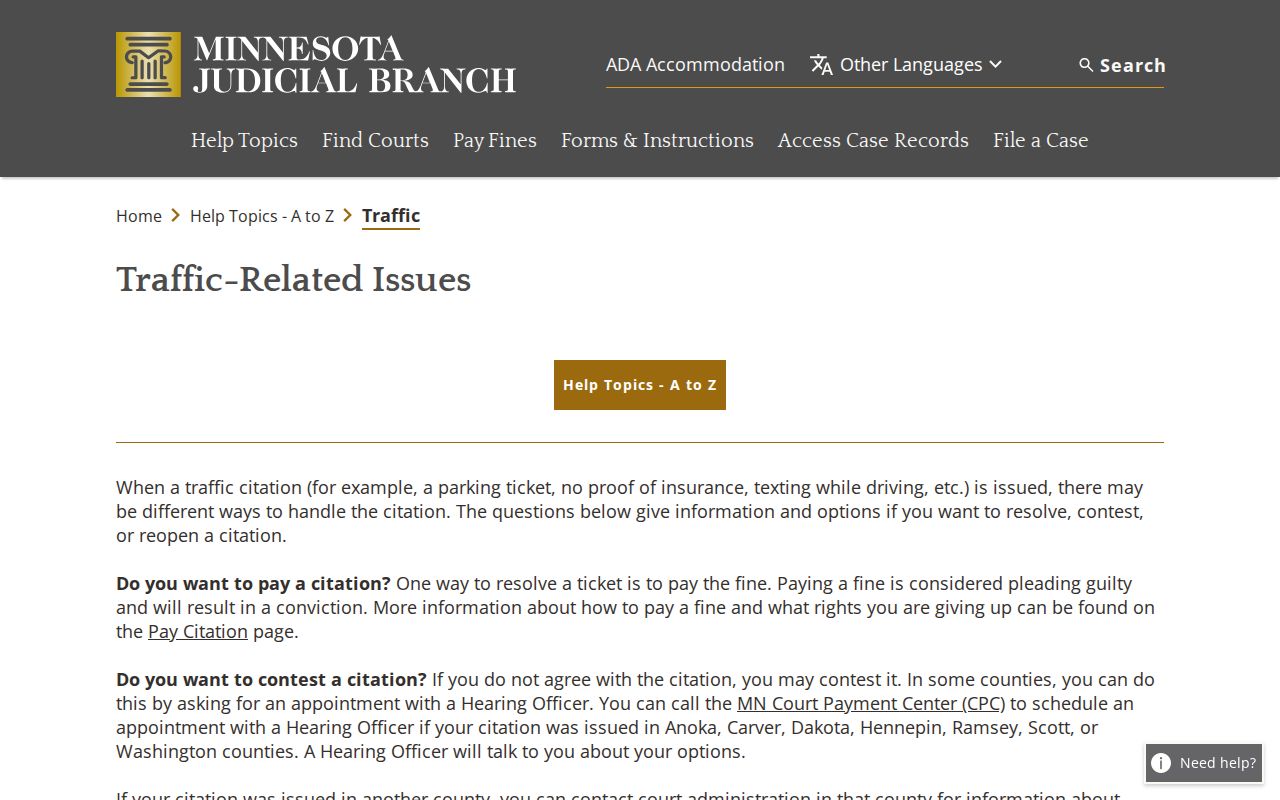
That page draws the line between paying a citation and contesting one. The choice a driver makes there decides whether a Blue Earth County warrant can follow.
Paying Through the Minnesota Court Payment Center
The Court Payment Center is the statewide office for fine and citation payments. Its contact form asks for a full name, a citation or case number, the offense date, a subject line, an email address, a reason for writing, and a message. It also warns against typing Social Security, bank, or card numbers into that message. Email replies usually take two to three business days. Phone lines run weekdays from 8:00 a.m. to 4:15 p.m. Central. If the Blue Earth County matter feels urgent, call rather than write. The center can even track down a citation number when you supply a license plate and date of birth. One limit applies. It is not a warrant confirmation line. The center's published field examples appear at mncourts.gov/pay-a-fine/faqs.
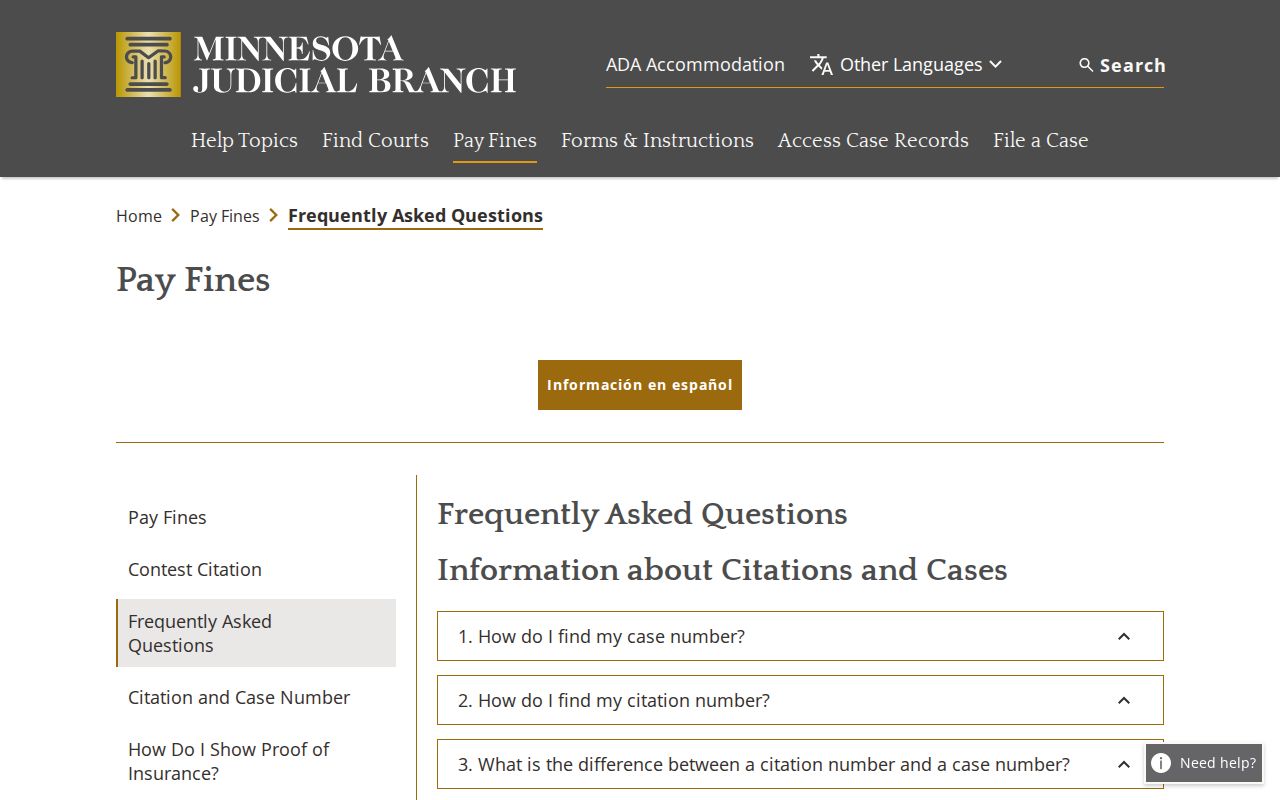
That page also walks through late penalties, license consequences, and the way unpaid Blue Earth County court amounts can end up with a collections referral.
What a Traffic Warrant Shows
A traffic warrant takes the same shape as any other district-court warrant. What the public record shows is less than what sits in the Blue Earth County court file, and each version is described next.
| Citation Number | The number printed on the ticket, commonly twelve digits. |
|---|---|
| Case Number | A district-court file number with a CR or VB marker. |
| Offense Date | The date of the alleged violation, which differs from the warrant date. |
| Complaint | The county feed's offense text, which can include an FTA marker. |
| Issuing Court | Blue Earth County District Court for matters filed in this county. |
| Fine and Penalties | Late penalties can be added, and payment is a guilty plea. |
| Status | Active, served, recalled, or inactivated, confirmed by the court. |
What Happens After the Response Period
A Minnesota citation generally carries a thirty-day response window, counted from the filing or appear-by date. Miss it and the pace picks up fast. The Court Payment Center's guidance warns of a late penalty that starts small and climbs after another thirty days, and it flags license consequences for certain traffic and vehicle-equipment cases. A warrant can follow a failure to pay or appear. Which consequence lands depends on the offense and the stage of the case. Unpaid amounts can also be referred to collections. Once that happens, payment runs through the Department of Revenue rather than the Blue Earth County courthouse. The sequence below traces how a ticket hardens into a court order.
Citation filed › thirty-day response window › late penalties added › failure to pay or appear › warrant or license action › court record update.
Paying or Lifting a Traffic Warrant
First question: what kind of case is it? A payable citation can often be settled with payment alone or through a plan. The Court Payment Center's payment plans run fifty dollars a month for eligible cases, and applications are generally processed in two to three business days. Eligibility is narrow. It reaches only payable citations meeting specific first-time conditions. A case that demands an appearance needs a court date, not a check. Whatever the situation, ask the Blue Earth County court what step actually inactivates the warrant, because a payment or a plan alone does not automatically recall it.
Caution: Paying a Minnesota citation is a guilty plea that waives listed rights, so ask about a hearing before you pay if you plan to contest it.
Madison Lake Administrative Citations
Not every ticket in Blue Earth County is a court case. The Madison Lake police page describes administrative traffic citations handled by the city itself, with a published citation amount of sixty dollars and a clerk payment route at 507-243-3011. That path is a city process. It is not a district-court fine and not a bond. The difference matters before you hand over money. Ask whether the paper in your hand is a city administrative citation or a Minnesota citation filed in district court. Mankato takes a third path, running parking tickets through its own city portal, which likewise sits apart from the warrant system.
Traffic Warrant vs FTA and License Holds
One missed traffic date can set off three separate consequences, and they do not clear together. The warrant belongs to the Blue Earth County court. A license hold belongs to the state. A collections referral lands with the state's revenue side.
| Consequence | Who Controls It | How It Clears |
|---|---|---|
| Traffic warrant | Blue Earth County District Court | Payment, appearance, or recall ordered by the judge |
| Failure-to-appear consequence | The charging court | New appearance or a disposition of the case |
| License suspension | Driver and Vehicle Services | Fine payment or appearance, plus any reinstatement fee |
| Collections referral | Department of Revenue | Payment through the collections channel |
Minnesota's sign-and-release statute appears below. It decides whether a qualifying traffic failure to appear in Blue Earth County even permits an arrest.
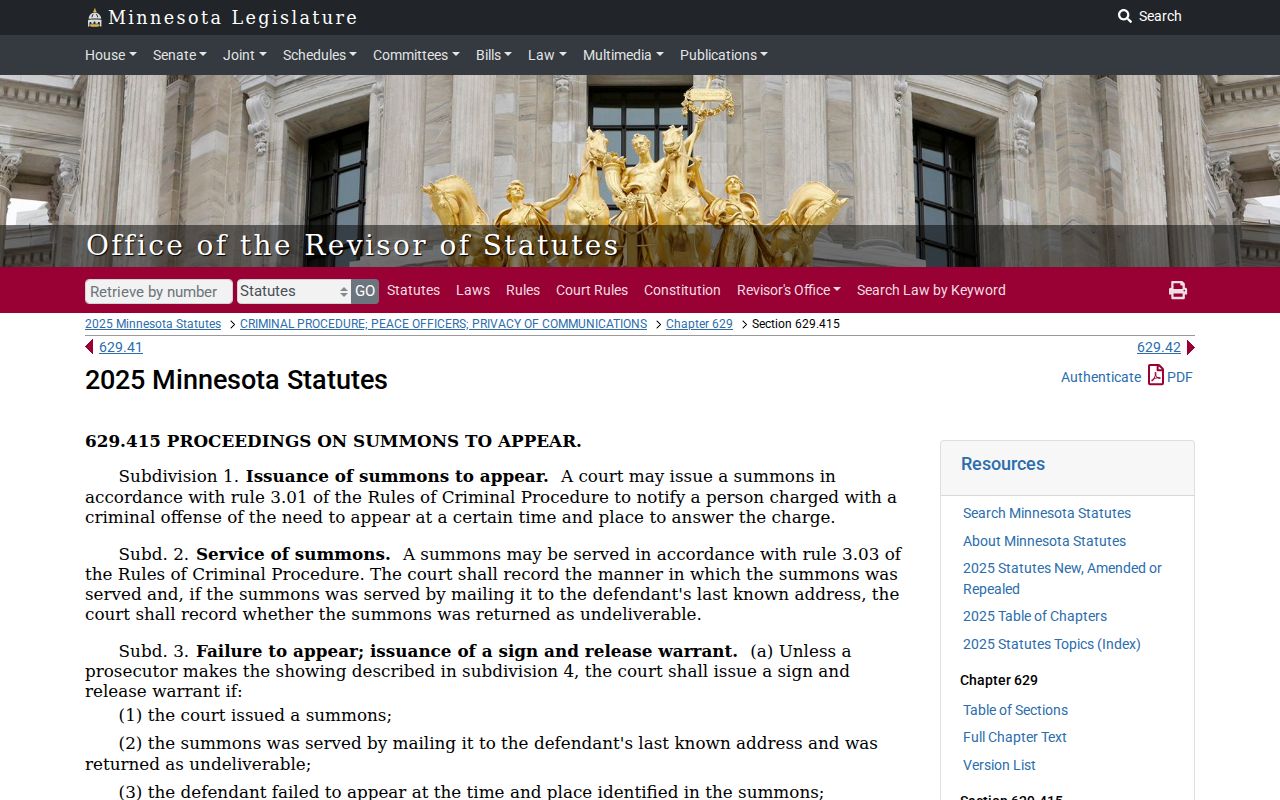
One Blue Earth County statute spells out the conditions, the notice an officer must give, and the inactivation that follows.
Collections and the Statewide System
Minnesota courts can send unpaid amounts to collections under state law, and then the payment route changes. Money mailed to the courthouse may sit unapplied. The collections balance keeps growing in the meantime. Ask which office holds the debt before paying it. Blue Earth County also warns against using its general online payment page for court fees. Court payment questions go straight to the court. Heed that warning, since a county permit or tax portal cannot clear a traffic warrant.
Key Rules:
Minnesota fine payment page - a response is generally due within thirty days, and payment can waive the right to a hearing.
Minn. Stat. 629.415 - a sign-and-release warrant does not authorize arrest or require bail.
Minn. Stat. 480.15 - unpaid court amounts can be referred to collections.